How Princess Penelope Teaches Critical Thinking Skills to Preschoolers
Discover how Princess Penelope's Purse of Preposterous Things builds critical thinking for preschoolers through interactive problem-solving, imagination, and Angela Santomero's proven "pause-and-play" method.
What does a fire-breathing dragon have to do with critical thinking for preschoolers?
More than you might think.
In Princess Penelope's Purse of Preposterous Things, every single episode is built around one central challenge: a problem appears in Storybook World, and your child has to help figure out how to solve it.
Not watch someone else solve it.
Help solve it themselves.
That's the difference - and it's intentional.
Why Critical Thinking Matters in the Preschool Years
Research consistently shows that the years between ages two and five are the most formative for developing higher-order thinking skills. This is the window when children are actively building the neural pathways that support reasoning, prediction, and decision-making - the foundational skills they'll use in school and throughout life.
Yet most children's content still presents problems and solutions as a one-way street: a character faces a challenge, figures it out, and the child watches passively. Princess Penelope flips that model entirely.
The Purse as a Problem-Solving Framework
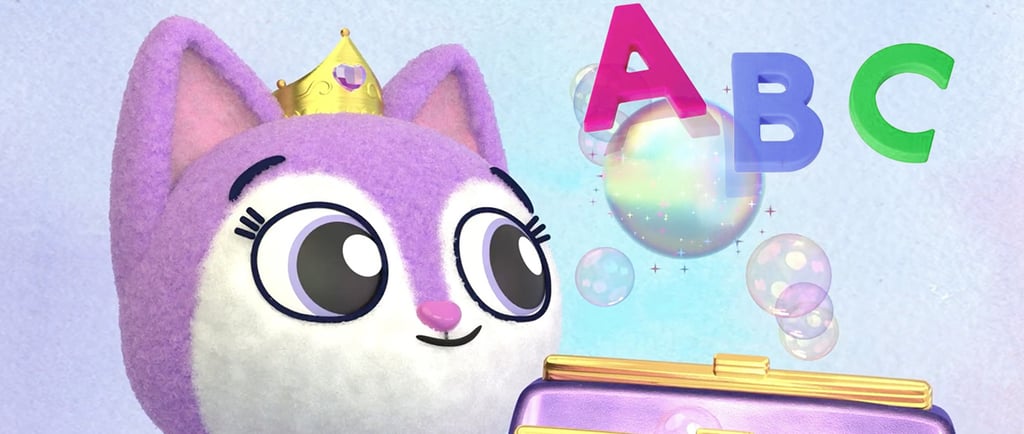
At the heart of every episode is Penelope's magical purple purse, gifted to her by Mother Nature with a specific purpose: to help protect the people and animals of Storybook World. Each day, the purse reveals three new items - always surprising, always a little preposterous.
In the full episode available on YouTube Kids, the purse opens to reveal pine cones, pillows, and pink marshmallows. Three things that start with P.
Three things that seem completely useless for stopping a fire-breathing dragon.
That's exactly the point.
When children watch Penelope hold up these three objects and face a real problem, they're not just entertained. They're being invited to think.
Which one would work?
Why?
What would happen if you tried the wrong one?
Angela Santomero, who created the show and holds a master's degree in child development and instructional technology, describes this as the "pause-and-play" approach - a method she pioneered with Blue's Clues and has refined across decades of research-backed children's media.
"I've always believed stories should help children practice for real life," Santomero says. "Princess Penelope shows kids that imagination and empathy are powerful tools they can use to take a moment, think, and help others. That's how true confidence grows."
What "Pause-and-Play" Actually Does to a Child's Brain
When Penelope pauses and looks directly at the viewer - "What do you think she should do?" - something important happens.
The child shifts from passive viewer to active participant. They have to evaluate options, weigh outcomes, and commit to an answer before seeing what happens next.
This is not a small thing.
Research conducted with Blue's Clues viewers at the University of Alabama's Institute for Communication Research found that children who watched the show "performed significantly better than non-viewers on standardized measures of important cognitive skills and abilities."
The same interactive methodology - pausing for a four-beat response window, asking children to predict and problem-solve before the story moves forward - is the engine driving every Princess Penelope episode.
The pause isn't just a cute trick.
It's the mechanism through which children practice reasoning in a safe, low-stakes environment.
They can shout the wrong answer and nothing bad happens. They can change their mind. They can try again. That kind of low-risk cognitive rehearsal is exactly how preschoolers develop confidence in their own thinking.
Problem-Solving Through Imagination, Not Rules
One of the most powerful things about Princess Penelope's approach to critical thinking is that there's no single "correct" answer a child has to memorize. The purse doesn't contain conventional tools. It contains preposterous ones - and figuring out how a pillow or a pine cone or a pink marshmallow could possibly help a dragon situation requires genuine creative reasoning.
In Chapter Six, "Save the Silly Show!," Penelope faces exactly this kind of challenge. She needs YOUR HELP to stop a fire-breathing dragon using only the contents of her purse.
Children watching don't just guess randomly. They observe the problem, consider each object, think about what properties it has, and reason through possibilities.
That's the full cycle of critical thinking: observe, analyze, hypothesize, evaluate.
And they're doing it while giggling at pink marshmallows.
A Curriculum Built for How Preschoolers Actually Think
Princess Penelope isn't designed the way a worksheet is designed. It's designed the way Angela Santomero has always designed her shows - around how preschoolers actually learn, which is through repetition, emotional engagement, humor, and feeling genuinely needed.
Every episode reinforces the same thinking structure: identify the problem, consider the options, make a choice, see the outcome.
That repetition is deliberate. Research from Santomero's formative testing process - which involves sitting with real children and observing their responses before a single episode is finalized - confirms that preschoolers internalize strategies most effectively when they encounter them across multiple stories with the same underlying framework.
By the time your child has watched a handful of episodes, they're not just entertained. They have a mental model for how to approach a problem: slow down, look at what you have, think about what could work, and try.
That's critical thinking. And it starts with a very preposterous purse.
Watch Princess Penelope's Purse of Preposterous Things on YouTube Kids, new episodes every week.


Follow Princess Penelope's Purse of Preposterous Things on Social Media:
Contact:
For SPEAKING INQUIRIES, please contact Team@MakeAkidsShow.com
For the most up-to-date information subscribe to the Princess Penelope Newsletter
PRINCESS PENELOPE'S PURSE OF PREPOSTEROUS THINGS™ is a trademark of Santo Studios llc.
All intellectual property, including but not limited to, logos, names, characters and images are trademarks of and licensed by Santo Studios llc. or related affiliates. All rights reserved